
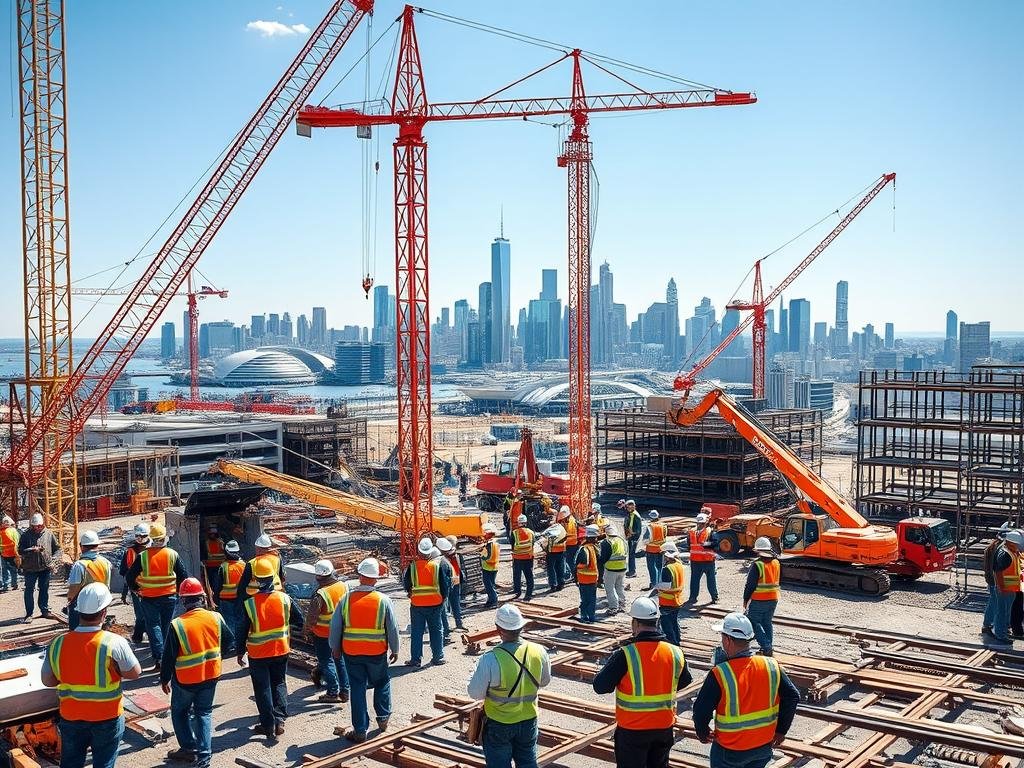
Explore the exciting world of construction, where every building changes our view. In Canada, construction jobs are plentiful, offering a chance to build a strong career. With cities growing, there are many jobs in construction, just like the materials used.
Whether you’re building houses or designing cities, construction jobs help you grow. It’s a key part of Canada’s economy, offering many chances to work hard and help the country grow. It’s a place full of opportunities, helping both experienced workers and those just starting.
Key Takeaways
- In Canada, the construction industry offers a multitude of career paths with growth potential.
- Contributing significantly to the economy, there are ample construction job opportunities for workers at all levels.
- Building trades employment is not just about labor; it encompasses a range of specialized skills and expertise.
- Entering the construction field can lead to a rewarding and stable professional journey.
- Construction careers advocate personal and professional development in a sector essential to national growth.
- An ever-evolving industry, construction positions itself at the forefront of innovation and sustainable practices.
Exploring the Myriad of Opportunities in Construction
The construction industry in Canada is key to the economy, with steady construction industry growth. It builds our cities and shapes the economy. With a skilled trades shortage, construction careers offer more than a job—they offer a rewarding career.
Overview of the Construction Industry in Canada
Canada’s construction sector is strong, adapting to changes and new tech. It creates millions of jobs, making it a top sector for employment. The industry needs skilled workers to meet the skilled trades shortage.
High-Demand Construction Jobs and Career Paths
- Electricians: Critical for both residential and commercial projects.
- Carpenters: Essential for framing, construction, and cabinetry.
- Project Managers: Oversee projects ensuring they are completed on time and within budget.
Each role needs specific skills but offers career growth. Starting a construction career means new opportunities and diverse projects across the country.
Emerging Trends in the Construction Sector
New trends like green building and digital tech are changing construction careers. These changes boost efficiency and sustainability, driving construction industry growth. Those who adapt to these trends can see career growth in this evolving field.
| Job Title | Required Skills | Trend Influence |
|---|---|---|
| Project Manager | Leadership, Time Management | Highly Influential |
| Electrician | Electrical Knowledge, Safety Compliance | Moderately Influential |
| Carpenter | Craftsmanship, Precision | Somewhat Influential |
Construction Jobs: How to Get Started
If you’re thinking about starting a construction career or switching to it, knowing the basics is key. This field has many entry-level jobs that are great for beginners. Here’s a simple guide to start your construction career.
First, education is important. A high school diploma is usually enough for many jobs. But, getting certifications or a degree in construction can make you more attractive to employers. Also, apprenticeships are great because they give you real experience and guidance from experts.
To get practical experience, think about volunteering or doing internships on construction sites. These activities improve your skills and help you meet people in the industry. This can be good for finding jobs later.
| Step | Action | Benefit |
|---|---|---|
| 1 | Complete a diploma or certification. | Lays academic foundation and enhances skills. |
| 2 | Join an apprenticeship program. | Offers real-world experience and technical training. |
| 3 | Volunteer or intern on construction projects. | Expands professional network and practical skills. |
Remember, starting in construction takes hard work and determination. But, the need for skilled workers means your efforts will likely pay off in a fulfilling career.
Whether you’re new to the workforce or moving from another field, construction welcomes you. By following these steps and always looking to improve, you can have a successful and rewarding start in this exciting field.
The Essential Skills for a Successful Career in Construction
To do well in construction, you need technical skills, soft skills, and safety knowledge. Each part is key to growing and succeeding in this field.
Technical Skills and Competencies
Technical skills are the base of a good construction career. They cover simple tasks like carpentry and plumbing to complex ones like project management and design. Knowing these skills well means projects get done right and fast.
Soft Skills That Make a Difference
Soft skills like talking well, working together, and solving problems are just as crucial. They help teams work better together, leading to project success. Training in these areas helps you grow and lead in your career.
Understanding Safety Regulations and Standards
Following safety rules is more than just following the law. It’s key to keeping everyone safe on the job. Knowing these rules well shows you’re serious about safety and helps keep your reputation strong.
| Skill Type | Skills Included | Importance Level |
|---|---|---|
| Technical Skills | Carpentry, Electrical, Plumbing, CAD | High |
| Soft Skills | Communication, Teamwork, Leadership, Problem-solving | High |
| Safety Knowledge | OSHA Standards, Local Safety Codes, Emergency Response | Critical |
Top Construction Certifications and Training Programs
For those aiming to make a mark in the construction industry, getting construction certifications and joining accredited construction programs is key. These programs give deep construction education to improve skills and increase job chances in different construction roles.
Important certifications like Certified Construction Manager (CCM) and LEED Green Associate are vital for career growth in construction. Also, OSHA Safety Certification teaches vital safety and legal knowledge needed for today’s complex projects.
- Project Management Professional (PMP) – focusing on construction project management skills
- Certified Construction Manager (CCM) – offering in-depth knowledge and managerial insights
- LEED Green Associate – providing expertise on sustainable construction practices
- OSHA Safety Certification – ensuring adherence to workplace safety and health regulations
Choosing the right construction education program can be tough. Top schools like the British Columbia Institute of Technology and George Brown College offer excellent programs. These programs are known for their quality and meet industry needs. They teach the basics and the latest in technology and rules, making sure graduates are ready for today’s construction sites.
Being in an accredited construction program or getting a specific construction certification boosts your career. It gives you the skills and knowledge for advanced roles in construction management, site supervision, and project estimation. Plus, these programs include practical, real-world training to get you ready for the construction industry’s needs.
So, whether you’re starting or want to improve in construction, investing in accredited programs and certifications is crucial. It’s a big step towards reaching your career goals and keeping your skills sharp.
Understanding the Roles: From Labourers to Project Managers
In the construction world, knowing the construction job hierarchy and role-specific duties is key. It helps in growing your construction career development. Each role, from labourers to project managers, plays a crucial part in a project’s success.
Career Progression in the Construction Industry
Starting in the construction sector often means entry-level jobs. Here, you learn and grow. Moving from a labourer to a skilled tradesperson means more responsibility and complex tasks. Leadership roles, like site supervisors and project managers, require overseeing projects and managing teams.
Day-to-Day Responsibilities Across Different Roles
Knowing role-specific duties is vital for newcomers. Labourers set up and clean sites, while skilled tradespeople do tasks like carpentry or plumbing. As you move up, you’ll focus on management, like planning logistics, ensuring safety, and keeping to timelines.
- Labourers: Prepare sites, handle construction materials, and perform cleanup tasks.
- Skilled Tradespeople: Execute tasks related to their specific training like electrical installations or masonry.
- Project Managers: Plan, manage, and optimize the flow of a project from start to finish.
The clear duties and career path in construction help in career growth. It ensures projects are done well and safely.
Navigating the Job Market: Where to Find Construction Work
Starting or growing in construction careers means knowing where to find jobs. This part talks about the best ways to search for construction job search opportunities. It shows how mixing old and new ways can lead to many chances. We look at digital sites and building trade unions as key places to check out.
Job Boards and Recruitment Agencies Specializing in Construction
Job boards and construction recruitment agencies are key for finding jobs. They focus on construction jobs, offering a list of vacancies not seen on general sites.
Networking and Union Job Resources
Networking and using union resources are great for finding jobs. Building trade unions often know about new projects and jobs. Here’s a guide to important groups and sites for construction workers in Canada.
| Resource Type | Name | Description |
|---|---|---|
| Job Board | ConstructionJobs.com | A leading job board exclusively for construction roles across Canada, featuring both entry-level and skilled positions. |
| Recruitment Agency | BuildForce Canada | A specialized agency dedicated to developing the construction workforce in Canada through career development and employment matching. |
| Union | The United Brotherhood of Carpenters | One of the oldest building trade unions in North America, offering extensive job resources and networking avenues for carpenters. |
Salary Expectations and Career Advancement in Construction
Choosing a career in Canada’s construction industry means looking at construction salaries and career advancement chances. This field offers good pay and lots of job openings. It’s great for both new and experienced workers to grow their careers.
How much you earn in construction depends on where you work, the project’s complexity, and your skills. For example, jobs in big cities often pay more because of the demand for specific skills and the cost of living. Jobs in smaller towns might pay less, based on the local economy.
Looking to move up in construction? There are many ways to do so. You can become a supervisor or a project manager. These roles can lead to better pay and more opportunities.
| Position | Entry-Level Salary | Mid-Level Salary | Senior-Level Salary |
|---|---|---|---|
| Construction Laborer | $30,000 | $40,000 | $50,000 |
| Project Manager | $60,000 | $85,000 | $110,000 |
| Site Supervisor | $50,000 | $70,000 | $90,000 |
Construction also means job stability and chances to keep learning. Getting more training and certifications is key to moving up in this field.
In summary, construction offers chances for better pay and career growth. Whether you aim for a higher position or a specialized role, the rewards are worth it. It’s a field that attracts many looking for a fulfilling career.
Seasonality and Regional Demand for Construction Jobs
Knowing how the regional construction job market changes with the seasons is key for construction workers. It helps them find more work. The demand for jobs varies by season and location, making it important to plan ahead.
Understanding Regional Construction Cycles
In Canada, the seasonal construction employment changes a lot with the weather. When it’s warm, construction work goes up, especially in cold places. But in winter, work slows down, so workers look for other jobs or improve their skills.
How to Stay Employed During Off-Peak Seasons
- Seeking off-peak construction work in places that don’t get affected by weather, like renovations or maintenance.
- Learning new skills that are needed all year, like HVAC or electrical work, can lead to more job chances in the regional construction job market.
- Looking for temporary jobs in other industries that are busy when construction is slow, like snow removal or setting up holiday events.
By managing their careers well and knowing the regional construction job market cycles, workers can handle the ups and downs of seasonal construction employment. This way, they keep earning and grow in their careers, even in a changing industry.
Preparing for the Future: Sustainable Construction and Technology
The construction sector in Canada is moving forward with sustainable construction practices and construction technology advancements. These changes are making projects better and opening up new green building jobs.
It’s crucial to make construction more sustainable. With growing environmental worries, buildings that save energy and waste less are in demand. This need is creating jobs for those who know about green building standards like LEED and BREEAM.
New construction technology advancements are on the rise. Tools like Building Information Modeling (BIM) and augmented reality are becoming common. They promise to make projects more precise, saving time and money, which benefits everyone.
- Integration of solar-friendly designs in project plans
- Use of recycled materials and sustainable resources
- Increased focus on smart buildings that optimize energy use and operational efficiency
To get ready for the future, it’s important to learn about these trends. Training in sustainable construction practices is getting easier, with many schools offering special courses.
| Technology | Impact on Construction |
|---|---|
| Building Information Modeling (BIM) | Enhances design accuracy, reduces costs, and improves project delivery timelines. |
| Augmented Reality (AR) | Provides real-time project visualizations to aid in precision and client presentations. |
| Green Building Materials | Lowers environmental impact and improves sustainability of construction projects. |
The need for green building jobs is growing. Construction workers need to learn new skills to stay relevant. The future of construction will be different, and starting to learn and use new technologies now is key.
Conclusion: Building a Thriving Career in Construction
The end of our guide shows the key parts for a successful construction career. It’s based on the insights we’ve shared about the industry’s wide range of opportunities. To find construction job satisfaction, you need to master many skills, keep learning, and aim for the best.
This field changes fast, needing you to adapt to new tech and ways of working. Being open to change is crucial.
Starting or growing your career in construction opens many doors. There are many roles and areas to explore, from in-demand jobs to new trends. By using your skills, getting certified, and networking, you can build a strong career in this field. This ensures job security and room for growth.
In short, the construction industry is full of chances for those who want to grow professionally. As we’ve shown, working hard, being safe, innovative, and collaborative will boost your career. It also helps Canada’s infrastructure grow. Your work in this field can bring you joy and help the community grow too.